A micro drama is a short series: episodes of one to three minutes, three to fifteen episodes in a season. The format was born in China, where it is a market worth billions of dollars, and it is now moving west. I spent 13 years shooting and running a production company, and I see this format as an unusually good fit for a single author with AI. Below is how I look at it: why it works for one person, how an episode is built, and where authors most often break it.
In short
Short answer: a micro drama runs on the viewer's nervous system, not on a pretty picture. An episode is built from several cycles of "tighten the spring, release it, tighten again," the first seconds decide whether people stay, and with AI one author can make an episode in a day and throw away the weak ideas. Idea and structure first, generations second.
Why AI micro dramas are taking off now
An episode used to cost tens of thousands of dollars: actors, a location, lighting, editing. With AI the picture is different. One person with Seedance, Nano Banana and a language model for the script can make an episode in a single day. To me the point is not savings but testing speed: you can try fifty hypotheses and keep the one that takes off.
That kind of iteration used to be impossible, because every miss cost a full production. Now a failed episode costs an evening, which is exactly what makes the format workable for an author with no crew.
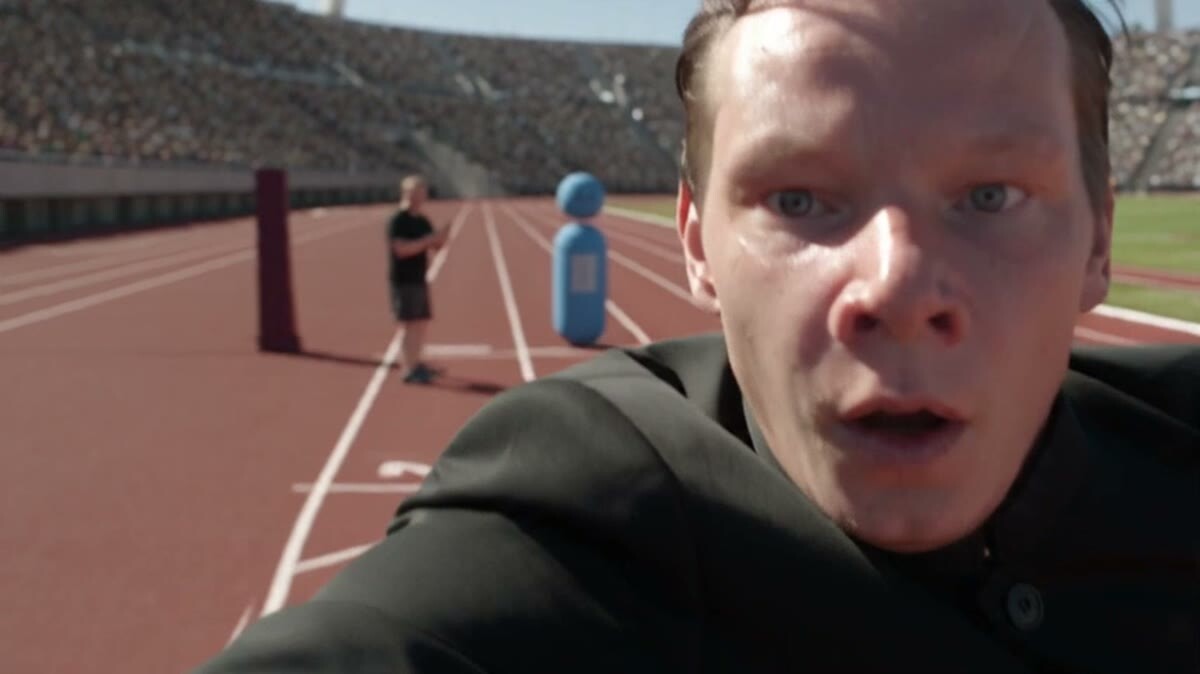
A frame from my Seedance test: the hero runs and looks straight into the camera, stadium behind him
A micro drama is engineering for the nervous system
I don't treat a micro drama as entertainment in the usual sense. It is engineering for the nervous system. Every one to two seconds the viewer decides again whether to swipe or stay, and your job is to give a reason to stay every single time.
The mechanism is a dopamine loop. First the spring tightens: the hero is in trouble, the villain pushes, the situation heats up. Then a sharp release: a counterstrike, an exposure, a win. And right away it tightens again and pulls toward the next beat. In my experience a good 90-second episode contains three to five such cycles. By my own estimate, around 10% of viewers finish a weak episode and around 80% finish a strong one. Those are my working benchmarks from practice, not a lab study, but the order of the gap is real.
Four emotional buttons
I split the emotions in a drama into four buttons:
Anger is the fuel of the story. Without it the viewer doesn't care.
Triumph is the payoff for anger, the reason people watch to the end.
Tenderness is the battery, it brings warmth back between the blows.
Intrigue is the engine between episodes, the reason people open the next one.
The villain should be absolute, with no tragic backstory. A gray villain you feel a little sorry for breaks the anger, and anger holds the whole structure up. The strongest device I know is the silent witness: a husband silently watches his mother throw out his pregnant wife. A person who does nothing makes viewers angrier than a loud villain does.
Timing: three to seven seconds for the peak
The dopamine peak is short, three to seven seconds. Long monologues kill the triumph: while the hero explains why he is right, the viewer has already left. A tender scene that runs past thirty seconds turns into vanilla, and the intrigue between episodes weakens.
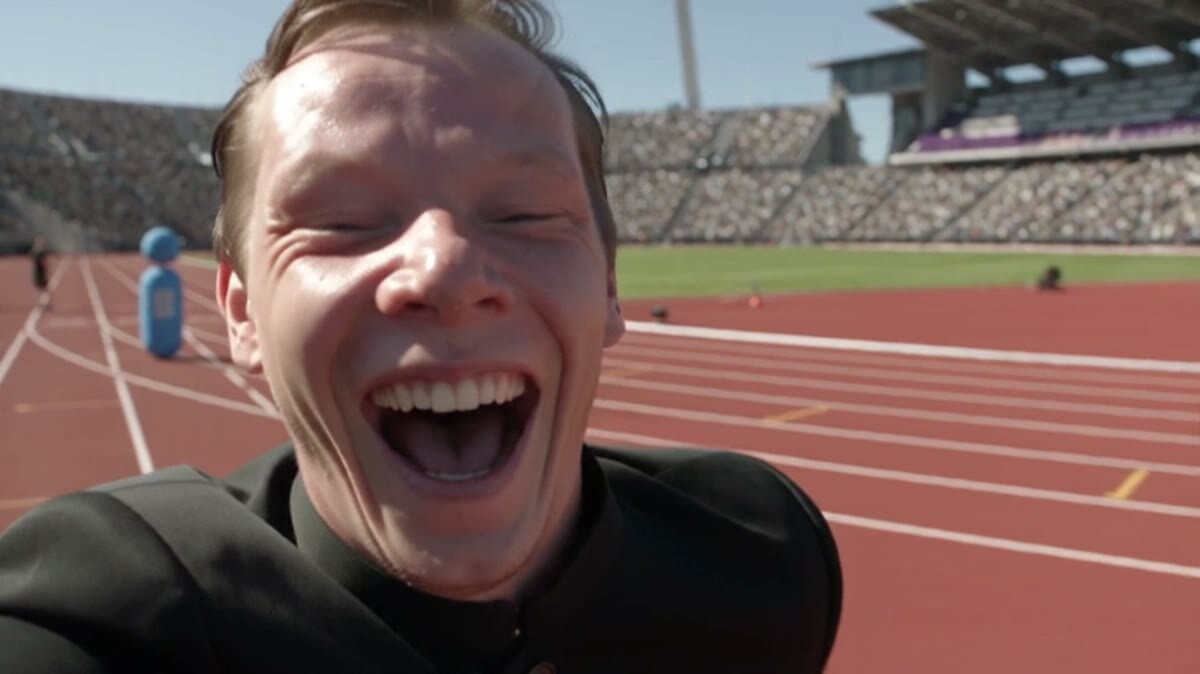
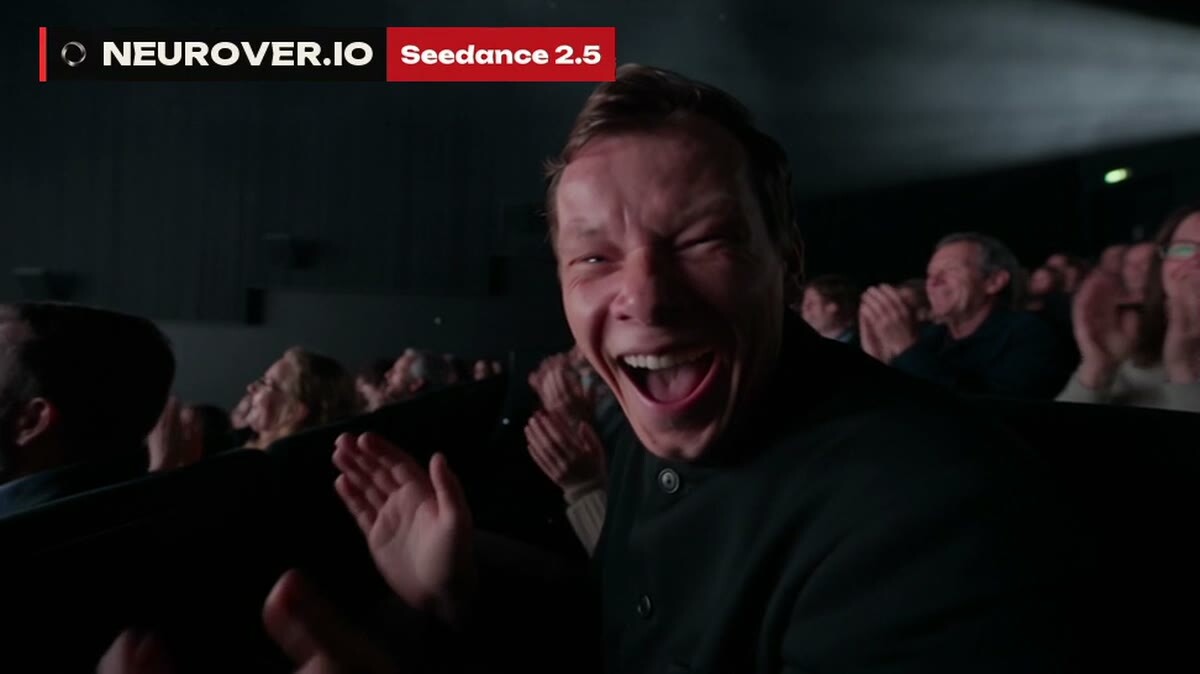
A close-up gives the viewer the emotion in a second: the hero's face at the finish
The hook: a second and a half
The viewer decides to stay or leave within about a second and a half. A few simple rules follow:
Don't open with a title card carrying the episode name: in my observation that alone costs around 30% of retention at once.
Don't open with a wide shot of a city and a voice-over. That is a swipe.
Start with action or a threat: something is already happening, the viewer doesn't know what yet, and wants to find out.
The most common failure of the genre is a slow start. The second is a crowded frame: keep no more than three active characters in a scene, otherwise the model mixes them up and the viewer loses track of whom to follow. Other typical deadly mistakes include gray villains, filler episodes and stock-looking faces.
The idea matters more than the model
One of my students spent a lot of money and time learning to generate in Seedance, yet sat at a few thousand followers. He got the theory and a cheat sheet from me, built a clip by the drama rules, and it reached millions of views. I dictated the plot of his next clip myself, a panther and a hunter, with an arrow hitting the paw in the finale, and he developed and produced it brilliantly. It worked again.
My takeaway: hitting the mark once is not enough. The hard part begins after that, when you must not become a hostage of a single format. We compared one script in realism and in cartoon style, and the cartoon version did better. In both versions the first seconds are a threat: a shark near a girl's feet. If the viewer doesn't care from the first seconds, they won't care about your video, because people are oversaturated with content and look for fast dopamine.
I built my own cartoon about a scout ant right in a lesson, animating for the first time in my life. It was the second iteration, and it was enough to show that the format is not limited to realism.
How I build a shot in Seedance
My main finding for dramas is the full-location approach. You take one frame of a location with mannequins, red and blue, and write in the prompt: "the man stands in place of the red mannequin." Seedance builds out the space itself and puts the camera where you told it. From a single frame of a corridor, the model guessed where the door was and what hung on the right.
A video reference of the hero gives a stronger likeness than a photo. I compared "outfit plus photo" against "outfit plus video" on the same prompt, and video wins. For more on the model itself, see Seedance 2.5, and for how to write video prompts, see AI video prompts.
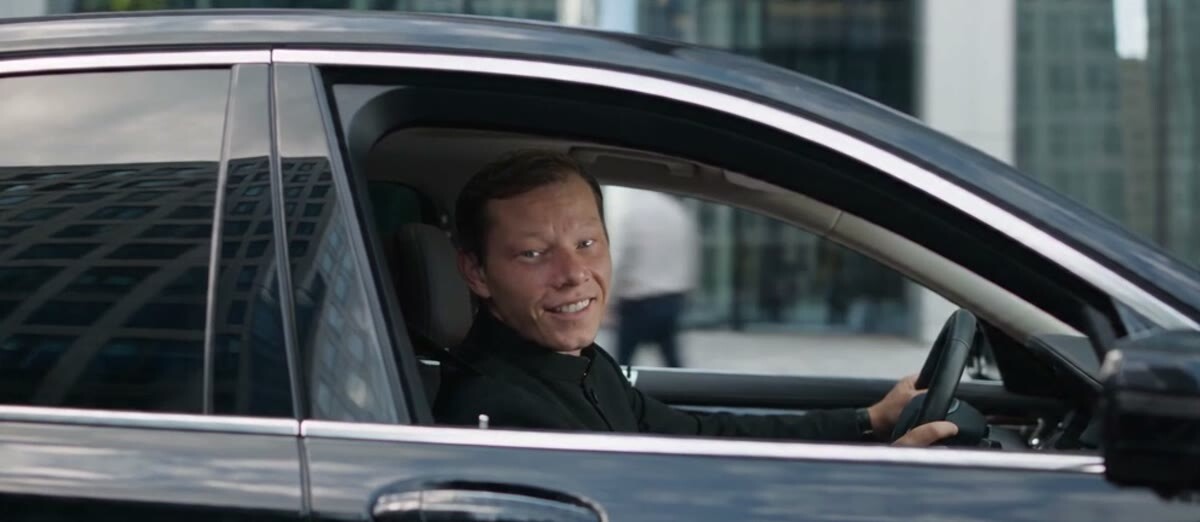
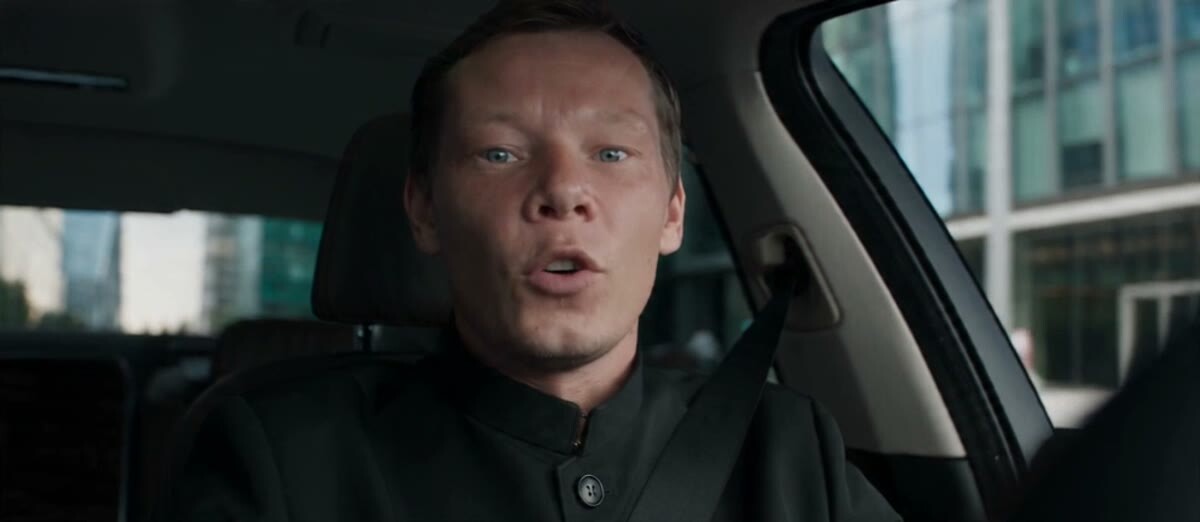
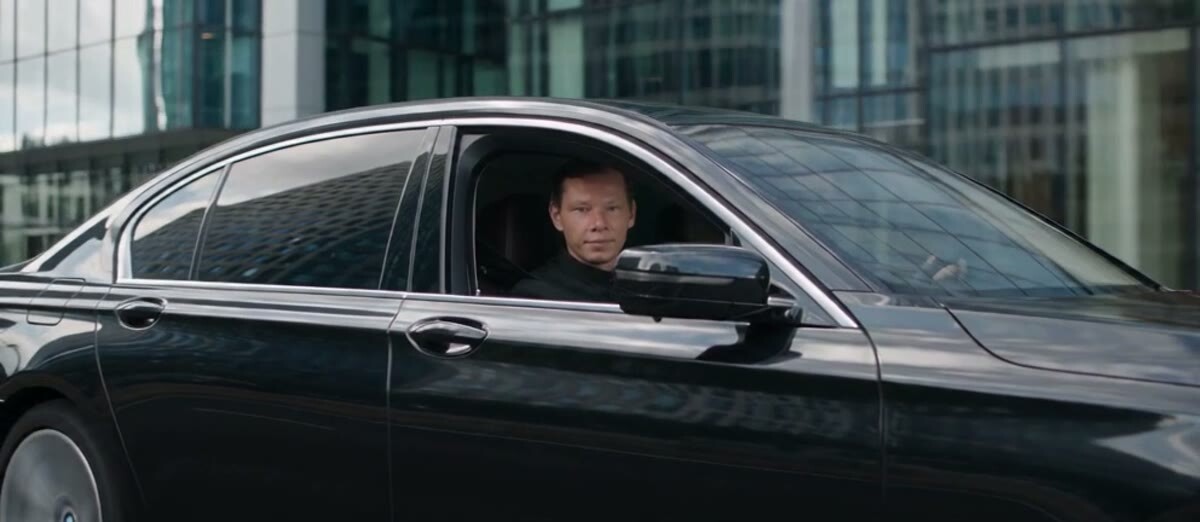
The hero at the wheel of a dark sedan: a frame from my Seedance testThe same episode from inside the car: a tight close-up, the face fills the frame
Another working trick is naming a director's style in the prompt. When I asked for Akira Kurosawa's style, the first generation came out weak: long takes and a slow tempo. That is simply his style. I asked for it tighter, and the clip became more dynamic. For a drama where a peak lasts seconds, pick the director's style to match the pace of the format.
Seedance also publishes official prompt-writing rules on its own site, in Chinese, and they are worth reading: much of what we find by trial is written there outright.
The exterior shot of the same episode: the hero stays consistent across angles
Where to start
Before spending tokens, I would run through a short checklist:
Is the goal clear, and how will you know the episode worked?
What will the viewer feel in the first second and a half?
Can you explain the idea to a friend in two sentences?
Why will people watch it to the end?
Idea first, and only then burn tokens. One strong idea beats thousands of average ones, and that rule has been tested on tens of millions of views of my own content. After that: an episode a day, a handful of hypotheses a week, and an honest selection by what people actually finish. I post deeper breakdowns and lessons in English on Patreon.
FAQ
What is an AI micro drama?
A short vertical series: episodes of one to three minutes, three to fifteen episodes per season. The format started in China and is now reaching Western audiences.
Can one person make a micro drama with AI?
Yes. Seedance for video, Nano Banana for frames and a language model for the script let one person ship an episode in a day. The real limit is not tools but script and rhythm.
How long should an episode be?
One to three minutes. Inside the episode keep three to five cycles of tension and release, with each peak lasting three to seven seconds.
What breaks a micro drama most often?
A slow start, a gray villain, long monologues and more than three active characters in a frame. All of these lower retention.
Realism or cartoon style?
Don't tie yourself to one. The same script did better as a cartoon for us than in realism. What matters more is that the threat or conflict sits in the first seconds.