I spent 13 years shooting and running a video production company, so I look at AI advertising as someone who used to have a gaffer, a sound recordist, a director and an editor on set. I like that the whole crew can now live in one head. But most of the AI ads I see were made fast and without a glance at the brand, and a client reads those as "here we go, the AI folks playing again." Below is what, in my experience, turns an AI film into an ad instead of a scam, and how I approach the idea, the brand and the money.
In short
Short answer: an AI ad looks like a scam when it has no idea, misses the brand's values, and tells its story in the language of TV when it is made for social media. There are two ways out: either the ad is believable, with the exact product the customer will receive and an original idea, or it is doomed because viewers spot AI in the first second. Idea and brand first, generations second.
Why so many AI ads look like scams
I put it to myself like this: if you make advertising with AI, you have two paths. Either the ad is super realistic, honest, with exactly the same product the customer will get, and with an original idea. Or it is doomed, because people see AI from the first second.
There are three causes, and none of them is about image quality.
There is no idea. In a video, the visual is not what matters most; the idea is. Competing on visuals is not that hard. Competing on ideas is. A beautiful frame that says nothing gets scrolled past like any other.
The brand was missed. I see plenty of creators who make an "ad for a brand" without a glance at its values. Wrong font, wrong colors, wrong tone. The brand does not care, because you missed what it lives by, and its social media manager will say: here we go, the AI folks playing again.
The cinematic look is in the wrong place. More on that below; it is the most common mistake in mid-sized budgets.
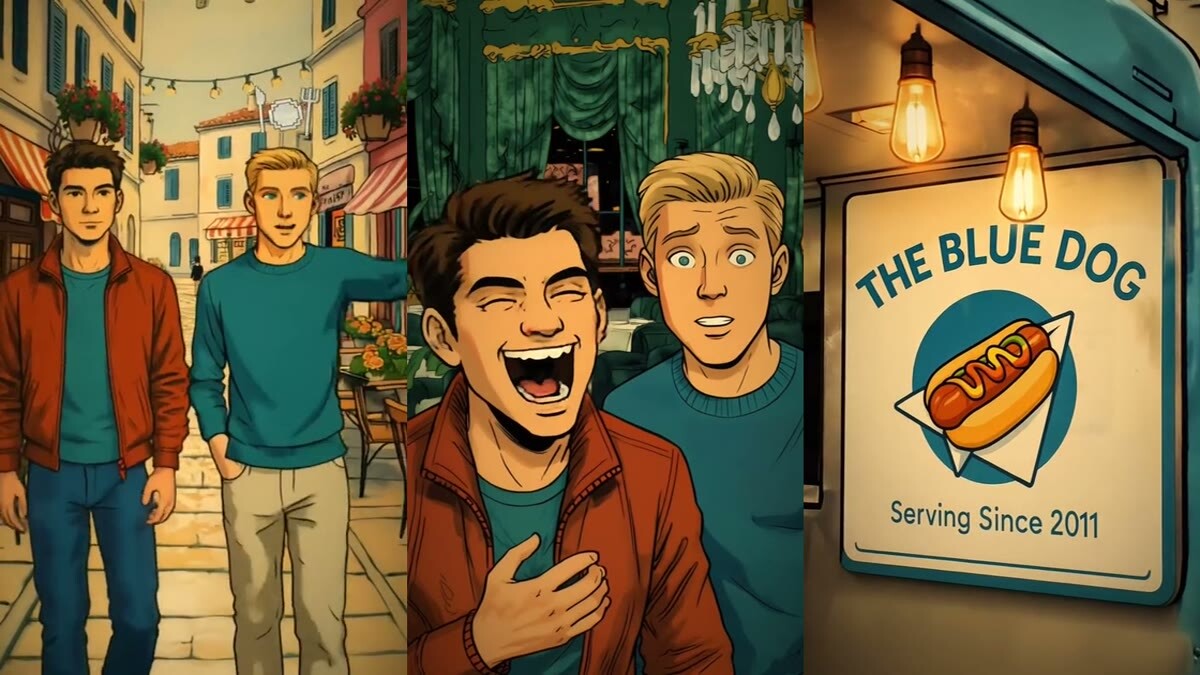
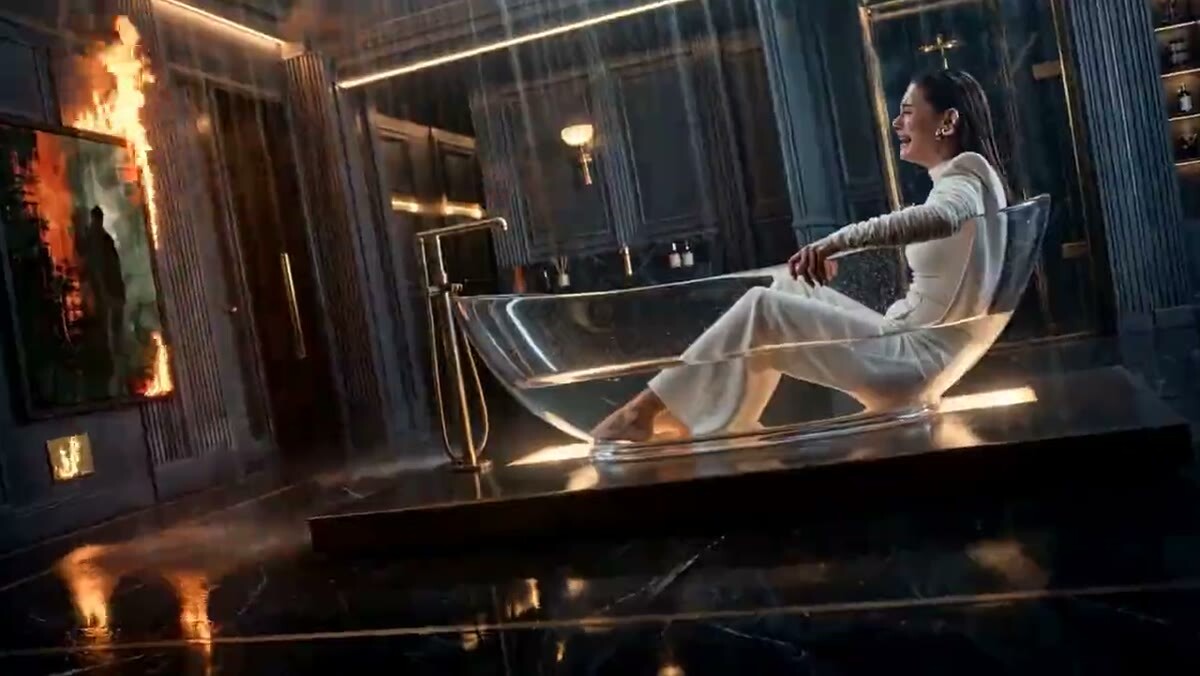
A frame from a film I made entirely with AI: the characters have personality, not just a pretty picture
Cinematic look vs. the language of the internet
A cinematic look is a set of visual tricks that make the brain believe it is watching a film: framing, color, camera movement. The test is simple: pause anywhere in the film, and every frame should look like a photograph. Every shot is justified, every camera move is justified, the focus is justified, and so is the light.
Now the important part for advertising. If you make an ad for social media, you cannot tell the story cinematically, in the language of television. The reverse is also true: a TikTok-style ad will not work on TV. People run away from television to find live emotion, and brands chase them online carrying television's advertising with them.
The formula I gave myself: on the internet you can use the visual language of television, but the script inside has to be an internet script. Mid-sized budgets make this mistake most often.
A word about the camera, too. Apple's ad shot on an iPhone is not about the iPhone. You had a gaffer, a sound person, a director and an editor, and you could have shot it on an old phone with the same result. The camera is only one part. It is the same with a neural network: the model does not make the ad, the decisions around it do. In AI video you are the operator, the writer, the lighting person, the editor, the colorist and the props department in one person.
Brand first, idea second
Before I invent a story, I study what the brand lives by. I need five things: who the audience is and what hurts them, how the brand talks, its visual code (colors, typeface, mascots), the platform the film will run on, and what is taboo.
Taboos differ a lot. Apple never compares its price with competitors, while Xiaomi does it constantly. Louis Vuitton would never go near trash content. If you miss this, you end up with a great picture for somebody else's brand.
I hand the research on a brand to Claude rather than doing it by hand: the AI collects it fast and I check it with my own eyes. In my training sessions I use a bank with a duck mascot as a case. I have been its customer for years and I hate paperwork with a passion, so I understand exactly the pain it solves. Knowing the audience's pain from the inside is worth more than any beautiful picture.
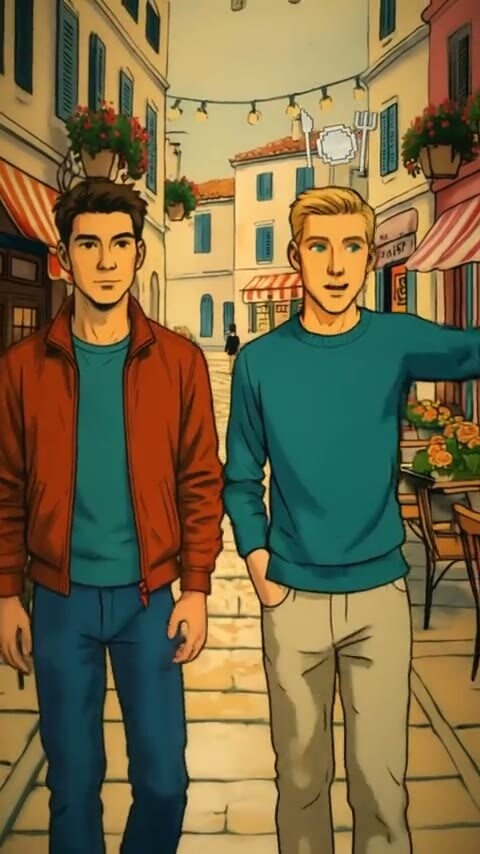
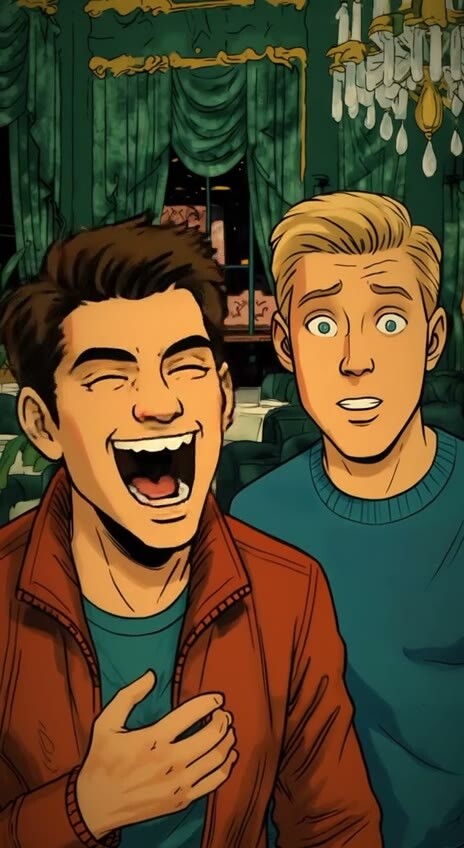
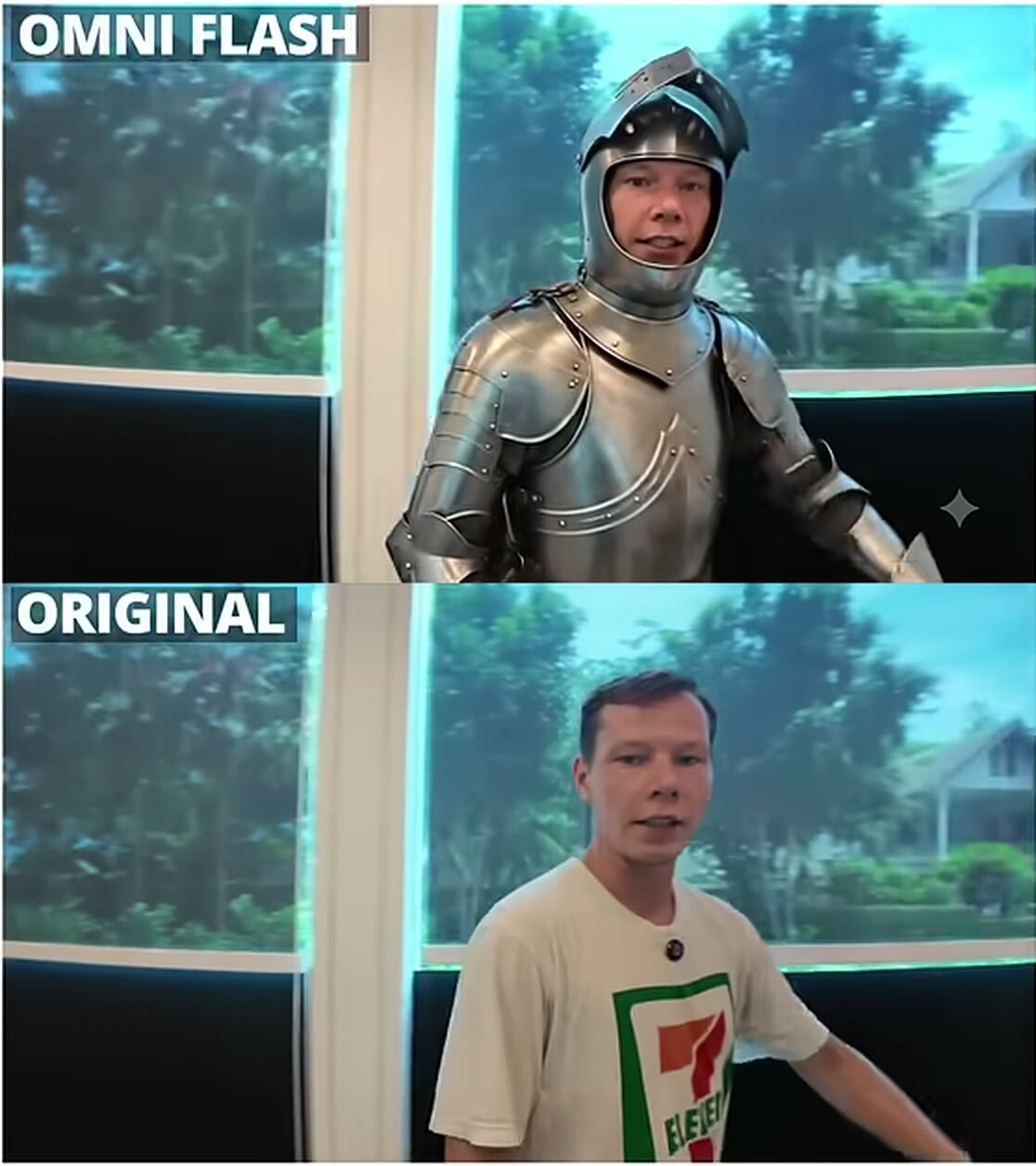
A character's emotion is remembered longer than an impressive background
The idea: many hooks, one that is yours
From AI I do not need a finished script. I need many story hooks. I ask for dozens and read until something answers inside me. What really resonates becomes the main idea. That is how I made the film that won an official Telegram contest: I went through something like a hundred ideas. The contest rules were a video of up to three minutes, vertical.
Our creative contribution is not inventing; it is picking the good from the bad. The same works with a client: I send a list of 10–20 ideas, they point at three, and I develop only those three.
I see three ways to an idea:
AI generates, you choose. This takes a trained eye.
Take someone else's idea and develop it. The odds of success are highest, and it is one of my main tools. My motto: use, adapt, develop. Every Hollywood film is a remake or a rework, and there is nothing shameful in that.
From scratch. Maximum difficulty, minimum chance of success. I don't recommend it. Even for me, with years of experience, only one or two of several attempts worked.
Here is an example for a milk ad aimed at regional television: the AI offered the idea "From the factory to your store in three hours." If I had handed that to a client as my own, they would have said I did great work.
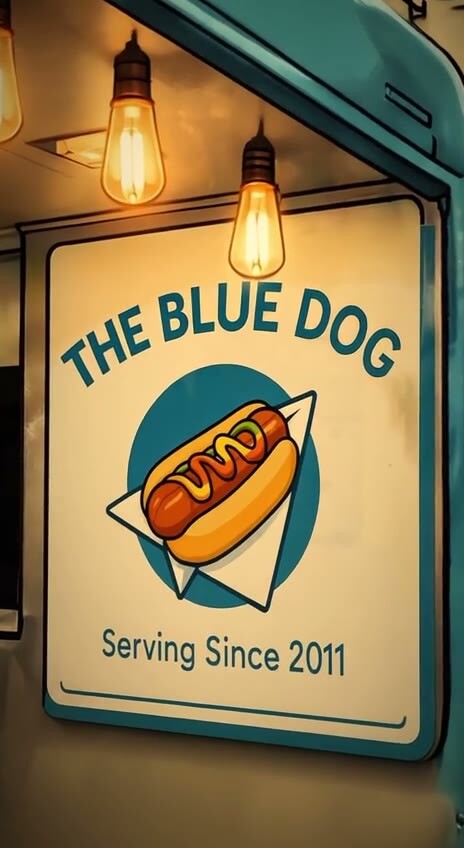
The product reads without words: the sign, the color, the logic of the place
Where an AI film breaks and how to fix it
The main problem of video generators is drift: after two or three seconds the character no longer looks like themselves. Whoever solves that first will be ahead of the competition.
What works today: full control comes only from a start frame and an end frame. There is no way around it: you create an image first, then animate that image. You can swap the generator like a puzzle piece; the system stays. A year ago I would have animated this kind of shot in Runway; today, in my opinion, nothing serious can be done there.
The hardest part is building one picture where the same character, a location in the brand's colors and all the props come together. It took me an hour and a half to get the first picture for the first generation. I spent several days on tests, and I developed the system prompt for changing the angle for almost two days.
I am honest about my own result: I did not animate it in the best way, and I can see the artifacts myself. The film came out vertical, around 25 seconds, for social media. I did the color myself, though I am not a professional colorist, more of an all-rounder, and I voiced it myself: why overpay a narrator, just pay me.
Product advertising is easier. A photo of the product in almost any quality is enough. In my training I deliberately took an old slipper: you can make ads out of almost anything. But if you sell shoes, add your own sneakers; if you sell jewelry, add your own ring. The product in the film has to be yours, not invented.
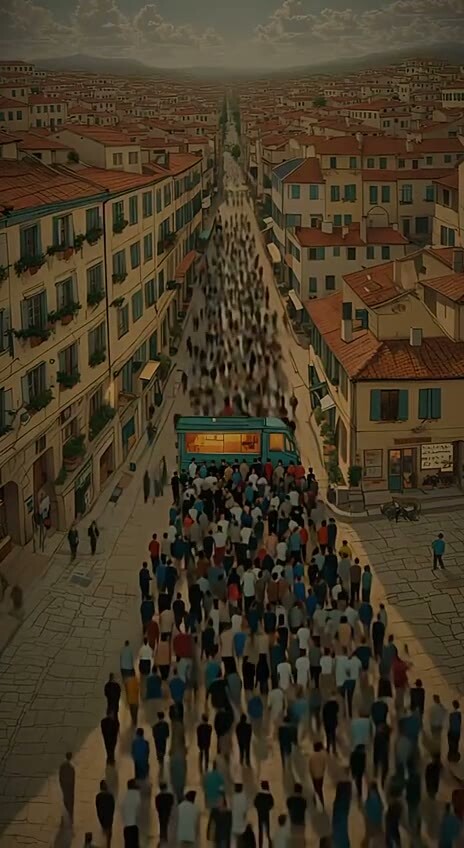
Scale and motion in frame give an ad the feeling of a living city
What it costs and how to talk to a client
My pricing principle: I always write three prices. The first is regular, the second is higher, the third is the maximum. But each price has to be defended: how many generations and days, how many revisions, and whether there is sound design. If a person writes "how much?" and nothing else, they have no clear request and they are not ready.
On revisions I work from an agreement I have used since my news-shooting days: two rounds free, after that paid. Frame extension, three angles, previs and commercial-use rights can be sold separately, and that is already a sales skill.
One more honest reference point: any film set, crew or actor is limited, while AI creativity is not. The money is not in dance clips and gags but in well-developed commercial films: companies are not fools, and all of them want to save. What you sell is not AI video and not digital avatars; you sell a solution.
What you can take into work today
Pick one client or brand and write down five things: audience and pain, tone, visual code, platform, taboos.
Ask your AI assistant for 20 story hooks and pick the three that resonate with you.
For a first attempt, take a product photo and make a product film: of all ad formats, it is the easiest to pull off.
Do not start with video: first get the start frame exactly right and keep the end frame ready, because full control comes only from that start-and-end pair.
Before showing it to a client, pause anywhere: if the frame does not look like a photograph, the film is not ready.
Because they have no idea, they miss the brand's values, and they are told in the language of television for social media. Viewers spot AI in the first second when nothing meaningful is behind the frame.
Can I make an ad from a single product photo?
Yes: a photo in almost any quality is enough for a product film. The product has to be yours and real, not invented, or the customer will receive something different from what they saw.
How do I come up with ad ideas using AI?
Ask the AI for many hooks, not a finished script. Pick the one that resonates with you and develop it. Other people's ideas can be developed too: use, adapt, develop.
How should I quote a price to a client?
I write three prices and defend each: generations, days, revisions and whether there is sound design. Two rounds of revisions are included, the rest are paid.